
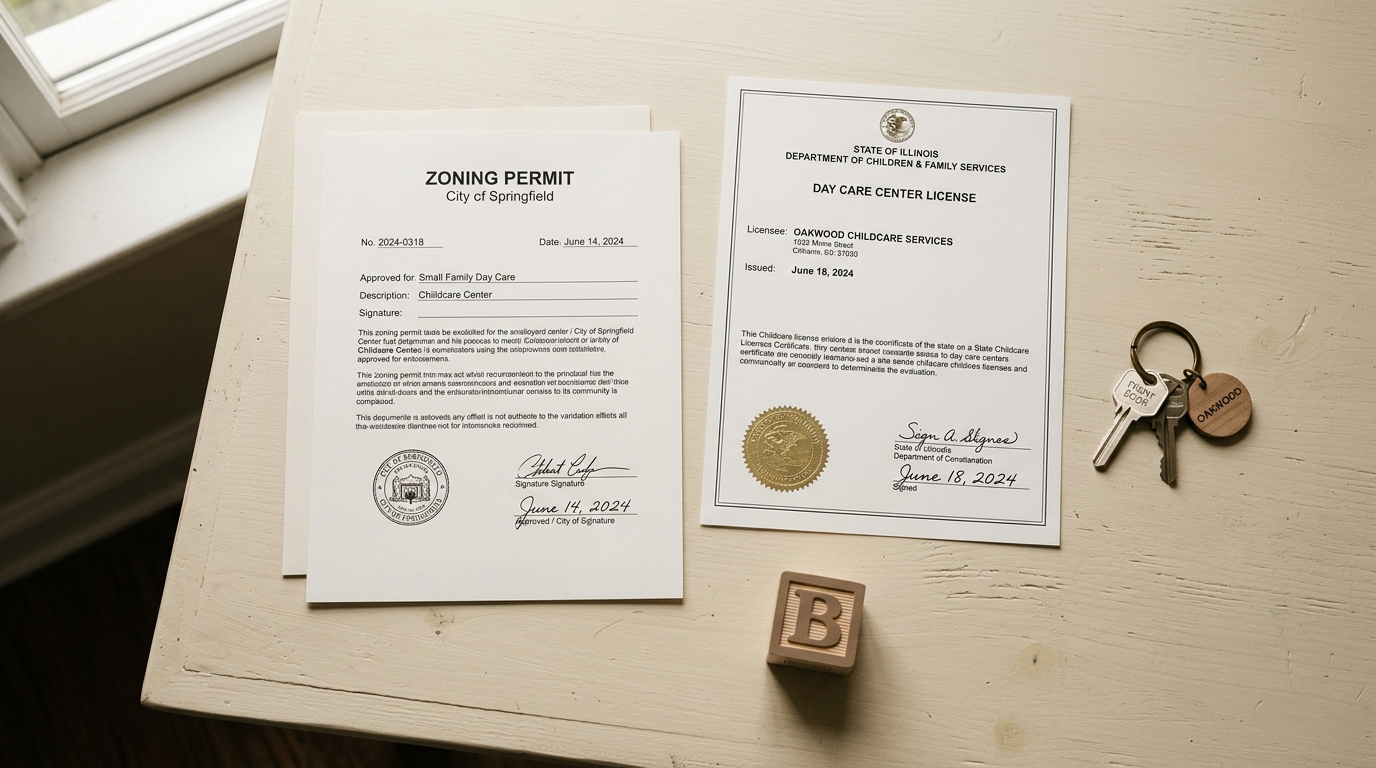
You’ve spent years building a licensed, operating preschool. When it’s time to sell, it’s natural to assume the buyer simply steps in and continues where you left off. But two things don’t transfer with the sale: your zoning use and your childcare license. Understanding both — and planning for them — is the difference between a smooth closing and a deal that stalls at the finish line.
What Zoning Means for a Preschool Sale
Zoning determines whether a property can legally be used as a childcare facility. Most preschools operate in commercially or institutionally zoned properties with a specific conditional use permit or special use permit for childcare. When you sell, the buyer inherits the property — but they don’t automatically inherit that permit.
In many jurisdictions, a change of ownership triggers a requirement for the buyer to re-apply for the childcare use permit. This process can take weeks or months depending on the municipality. In some cases, the buyer may need to appear before a zoning board.
What this means for you as a seller: disclose the zoning status early. Pull the permit documentation, confirm the current permitted use, and know whether your municipality requires re-application on ownership transfer. The earlier your buyer understands the zoning timeline, the less likely it is to become a closing delay.
What Licensing Means for a Preschool Sale
In every state I’m aware of, a childcare license is issued to a specific owner or entity — it is not an asset that transfers with the sale. When your business changes hands, the buyer must apply for their own license with your state’s childcare licensing agency.
This has real implications for your transaction:
- Timeline: Licensing timelines vary by state. In Texas, for example, the new owner application process can take 60–120 days depending on background checks, inspections, and agency workload. Your deal timeline needs to account for this.
- Continuity: In many states, the existing license can remain in effect during a transition period while the new owner’s application is pending — but this is not guaranteed and varies by state. Your transaction attorney and the buyer’s licensing consultant need to coordinate this carefully.
- Seller cooperation: Buyers will need your cooperation during their licensing process — access to the facility for inspections, documentation about the physical plant, and sometimes a letter of support. Build this into your transition plan.
The Change of Control Problem
Beyond zoning and licensing, “change of control” is a concept that shows up in several places in a preschool transaction:
- Your lease: Most commercial leases require landlord consent for a change of control. If you don’t own the real estate, your landlord will be involved in this deal. Landlords can slow things down — or, in rare cases, use the change of control as leverage. Know your lease terms before you list.
- State subsidy contracts: If your school receives child care subsidies (CCMS, CACFP, or similar), those contracts are with your entity and will need to be re-established by the new owner. This affects cash flow during the transition.
- Franchise agreements: If you operate under a franchise, the franchisor must approve the transfer. This is a separate process with its own timeline and fees.
What Sellers Can Do to Protect the Deal
The best thing you can do is get organized early. Before you list your preschool for sale:
- Pull your current zoning permit and confirm the permitted use is current and in good standing.
- Review your childcare license — make sure there are no open violations, deficiencies, or pending complaints. Buyers will discover these in due diligence, and unresolved licensing issues are deal-killers.
- Read your lease. Know exactly what it says about assignment and change of control.
- Identify any state contracts that will need to be re-established and disclose them upfront.
None of these are insurmountable. But they’re all things that take time, and time is the one resource deals don’t have enough of at the end. The sellers who close cleanly are the ones who front-loaded this work.
A Note on Timing
Because licensing is the buyer’s responsibility, not yours, sellers sometimes underestimate how much it affects the deal structure. A buyer who hasn’t done their homework may not realize the licensing timeline could push their opening date back by three months. That affects how they structure their purchase price, their financing terms, and their transition expectations.
I always walk buyers through the licensing reality early in the process. It’s not a barrier — it’s just a variable that needs to be planned for. The transactions that hit delays at this stage are the ones where no one addressed it until closing was already on the calendar.
If you’re preparing to sell your preschool and have questions about how zoning or licensing will affect your specific transaction, reach out. This is one of those areas where the details matter, and getting it right from the start saves everyone a significant amount of stress.