
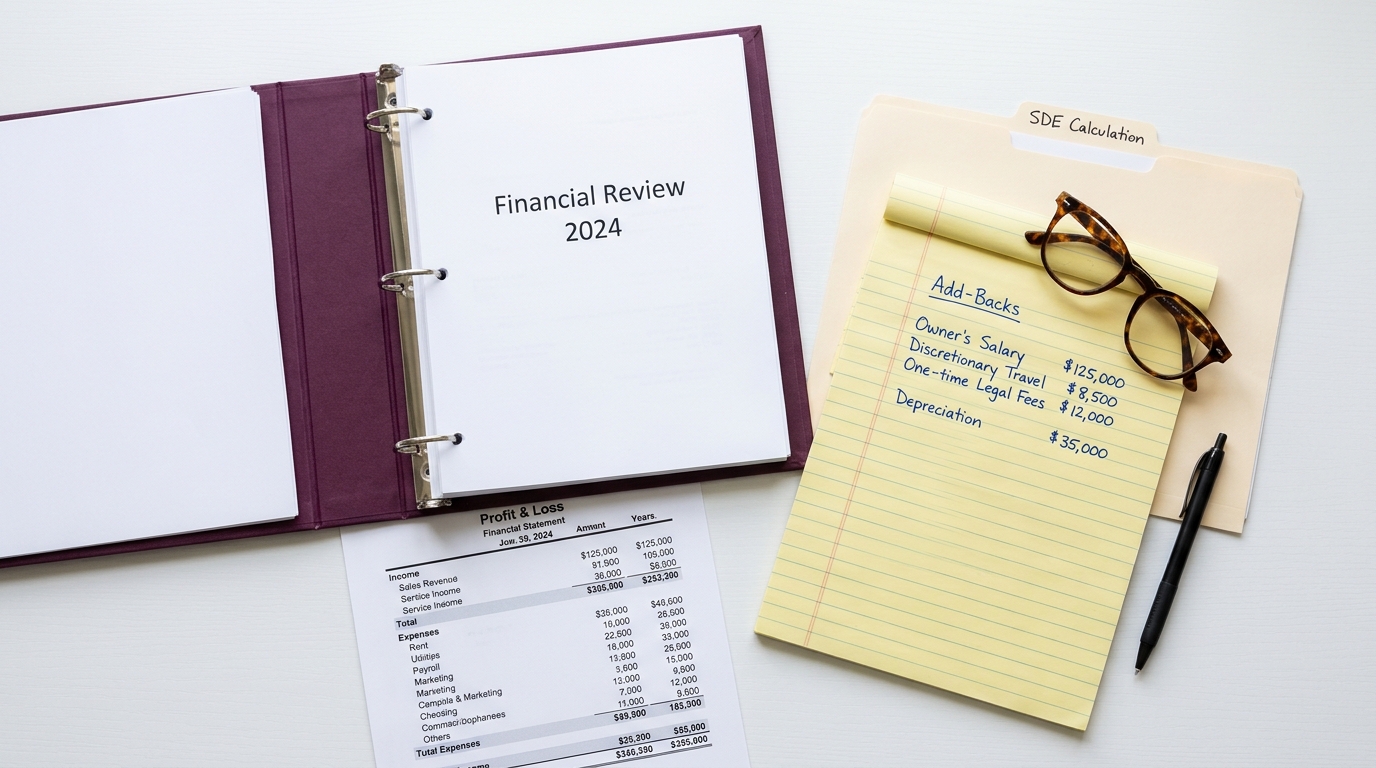
If you’ve talked to anyone in the business of buying and selling preschools, you’ve probably heard the acronym SDE. Seller’s Discretionary Earnings. It comes up early, it comes up often, and most sellers don’t fully understand what it means — or how much control they have over it.
That’s a problem, because SDE isn’t just a number on a spreadsheet. It’s the number that gets multiplied to determine what your preschool is worth. If you don’t understand how it’s calculated, you can’t influence it. And if you can’t influence it, you’re leaving money on the table before negotiations even begin.
Here’s how SDE works, what goes into it, and why understanding it before you list is one of the highest-ROI things you can do.
What SDE Actually Is
SDE stands for Seller’s Discretionary Earnings. At its core, it’s a measure of the true earning power of your business — specifically, the total financial benefit the owner derives from it in a given year.
The formula looks like this:
Net Income + Owner’s Compensation + Add-Backs = SDE
Start with your net profit. Add back whatever you paid yourself (salary, distributions, benefits run through the business). Then add back any expenses that were discretionary, one-time, or personal in nature. The result is SDE — the normalized picture of what this business actually earns when it’s being operated by a full-time owner.
That number, multiplied by a multiple (more on that in a moment), gives you a valuation range.
What Add-Backs Are — and Why They Matter
Add-backs are the adjustments that separate a tax return from a business valuation. They exist because business owners — entirely legally — run certain expenses through the company that wouldn’t necessarily carry forward to a new owner, or that reflect one-time events rather than ongoing costs.
Common add-backs in preschool sales include:
- Owner’s salary and benefits. Whatever you paid yourself, including health insurance, retirement contributions, or vehicle expenses. A buyer brings their own compensation structure — yours gets added back to show the business’s earning power before that number.
- One-time repairs or capital expenditures. If you replaced the HVAC system last year, that’s a real expense — but it’s not a recurring one. A buyer won’t face that same cost next year. It can often be added back.
- Personal expenses run through the business. Cell phone, travel, subscriptions, meals — whatever has a legitimate business use but was sized for your personal lifestyle. These get normalized.
- Non-recurring consulting or legal fees. If you spent $15,000 on an attorney for a one-time lease renegotiation, that’s not an ongoing cost of running the school. It can be documented and added back.
- Owner family members on payroll. If a spouse or family member is paid above-market or for a role that wouldn’t carry forward, that delta may be an add-back.
None of this is about inflating your numbers. It’s about presenting an accurate picture. A buyer is purchasing a going concern — your business as it would operate under their ownership. Add-backs adjust the historical financials to reflect that reality.
The Multiple: Where Add-Backs Become Dollars
Once SDE is calculated, a buyer applies a multiple to arrive at a valuation. For childcare businesses, that multiple typically ranges from 2.5x to 4.5x, depending on factors like enrollment stability, staff tenure, lease security, and how dependent the operation is on the owner.
Here’s why understanding add-backs matters so much:
Suppose your net profit on paper is $80,000. But after adding back your salary ($65,000), your health insurance ($12,000), and a one-time roof repair ($18,000), your SDE is $175,000. At a 3x multiple, that’s a $525,000 valuation — not $240,000. That’s a $285,000 difference driven entirely by properly documented add-backs.
That math is not hypothetical. It plays out in real transactions all the time. Sellers who don’t know to claim their add-backs — or who can’t document them — leave significant value behind.
What You Need to Have Ready
To calculate a credible SDE and support it through due diligence, you need documentation. Specifically:
- Three years of profit and loss statements
- Three years of business tax returns
- A clear record of your compensation (salary, distributions, benefits)
- Documentation for any add-backs you’re claiming — receipts, invoices, written explanations for one-time events
Buyers and their lenders will verify every add-back. The cleaner and more organized your documentation, the more credible your SDE — and the more leverage you have in the negotiation. An undocumented add-back is an add-back a buyer can push back on.
The Mistake Most Sellers Make
Most sellers hand their tax returns to a buyer or lender and let those numbers speak for themselves. The problem is that tax returns are optimized to minimize taxable income. They’re built to show the IRS a small number. SDE is built to show a buyer a true number — and those two things point in opposite directions.
A sophisticated buyer will ask for an add-back schedule. If you don’t have one — or if you have one that isn’t documented — you lose credibility at exactly the moment you need it most.
The sellers who get the best outcomes start this process long before they list. They know their SDE. They know their add-backs. They’ve worked with their accountant to build a clean, defensible number. When a buyer asks, they’re ready.
What This Means for You
If you’re thinking about selling — even if that’s two years from now — your SDE is the most important number to understand and prepare. It determines your valuation range before a buyer ever walks through your door.
Start by pulling three years of P&Ls and identifying every expense that’s personal, discretionary, or one-time. Work with your accountant to calculate a preliminary SDE. Then apply a rough multiple to get your ballpark value range.
What you’ll likely find is that your business is worth more than your tax returns suggest. That gap — between what the IRS sees and what a buyer should see — is where preparation pays off.
You built something real. Make sure the number on the table reflects it.
Chelsea Reue is a childcare business sales specialist and licensed real estate agent with Preschool Exchange, helping preschool owners understand the value of what they’ve built and prepare for a successful transition.