
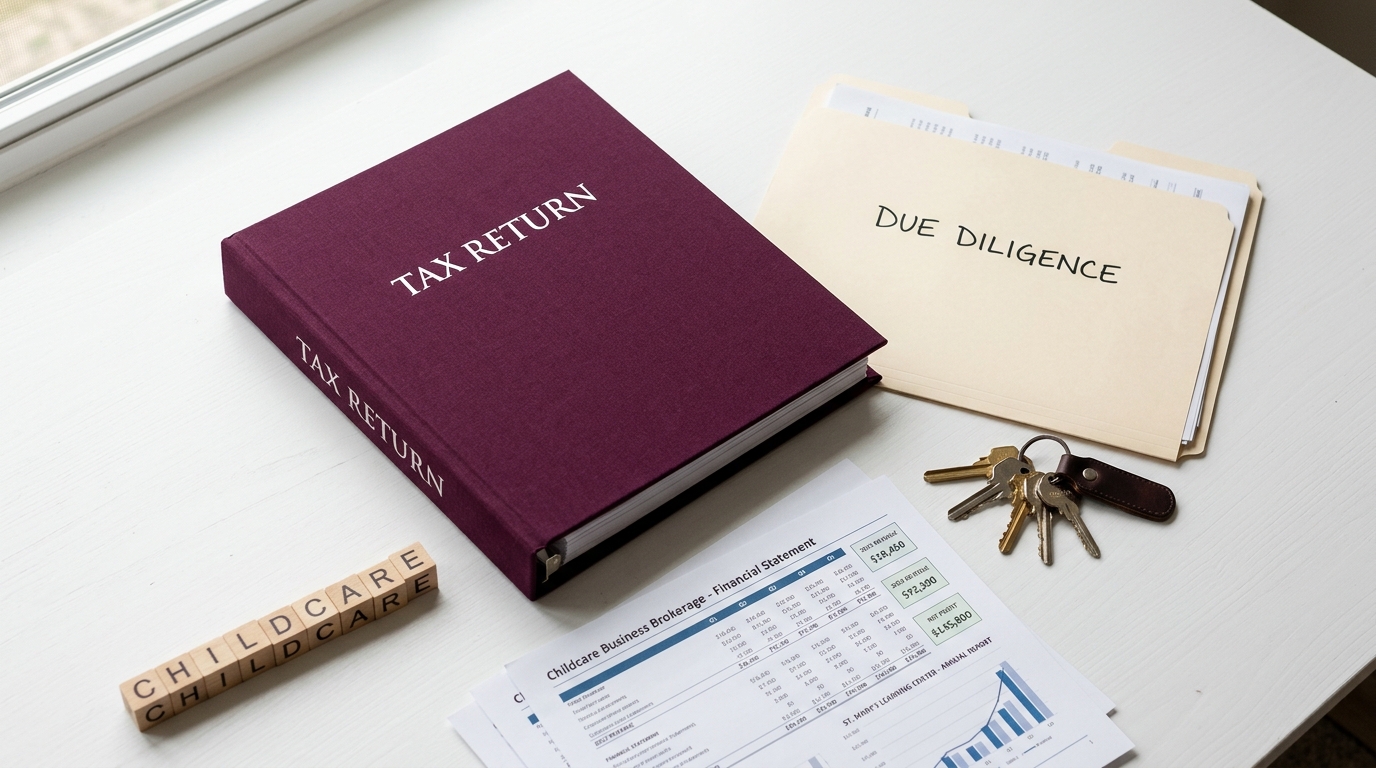
If you’ve ever wondered why some preschools sell for significantly more than the value of their furniture and equipment, goodwill is the answer. Goodwill is the invisible value that lives in your reputation, your relationships, and the trust parents have placed in your school. In most childcare transactions, it’s the largest single line item in the purchase price — and understanding how buyers evaluate it can help you maximize it before you sell.
What Goodwill Actually Is
In business valuation, goodwill is the amount a buyer pays above the tangible asset value of a business. For a preschool selling at $600,000 with tangible assets (furniture, equipment, curriculum materials) worth $60,000, the remaining $540,000 is goodwill. That’s 90% of the sale price attributable to something you can’t physically touch — and it’s what buyers compete for and lenders scrutinize most carefully.
Enterprise Goodwill vs. Personal Goodwill
Not all goodwill is equal, and buyers know the difference:
Enterprise Goodwill is value that belongs to the business itself — not to you as the owner. It includes an established brand, a strong waitlist, documented systems, an experienced director who plans to stay, and a community reputation that exists independently of who runs the school. Enterprise goodwill transfers fully to the buyer and commands a premium valuation.
Personal Goodwill is value tied specifically to you as the founder — your personal relationships with families, your presence in the community, your unique way of running things. If parents stay because of YOU, and you’re leaving, that’s a risk buyers discount. Personal goodwill doesn’t transfer with the sale, and it can significantly reduce what buyers are willing to pay.
How Goodwill Affects Your Valuation: A $200,000 Difference
Two childcare centers with identical financials — both generating $200,000 in SDE:
School A — High Personal Goodwill Risk: Owner-operated, no director, families know the founder personally, no documented systems. Buyer concern: will families leave when the owner does? Multiple: 2.5x. Sale price: $500,000.
School B — High Enterprise Goodwill: Director-led, owner rarely on-site, 60-child waitlist, documented SOPs. Buyer view: business runs independently of the founder. Multiple: 3.5x. Sale price: $700,000.
The difference: $200,000 — for the same financial performance. The only variable is how goodwill is structured and whether it transfers with the business.
How to Convert Personal Goodwill to Enterprise Goodwill
The good news: you can make this shift before you list, if you start early enough.
- Install and empower a strong director. A qualified director who runs day-to-day operations independently is the single most powerful thing you can do. Budget $60,000–$85,000/year. It’s an investment in your sale price that typically returns 5–10x at closing.
- Document your systems. Staff onboarding, parent communication protocols, curriculum planning, enrollment processes — put these in writing. Operational SOPs signal that the business can be taught, not just learned by osmosis.
- Build your brand beyond your name. Make sure your school’s marketing, signage, and communications reflect the school’s identity, not just yours personally.
- Maintain enrollment stability. A full school with a waitlist is the clearest signal of strong enterprise goodwill. Buyers pay a premium for demand that exceeds supply.
- Gradually transition family relationships. Have your director handle family meetings and communications. Shift the primary point of contact so families know the school — not just you.
What This Means for You
Most sellers don’t think about goodwill until they’re already in negotiations — and by then it’s too late to change the structure. The sellers who maximize goodwill are the ones who spent 12–24 months before listing deliberately building a business that runs without them. If you’re within that window, this is the most valuable work you can do. If you’re further out, you have even more time to build enterprise goodwill that commands a premium at sale.