
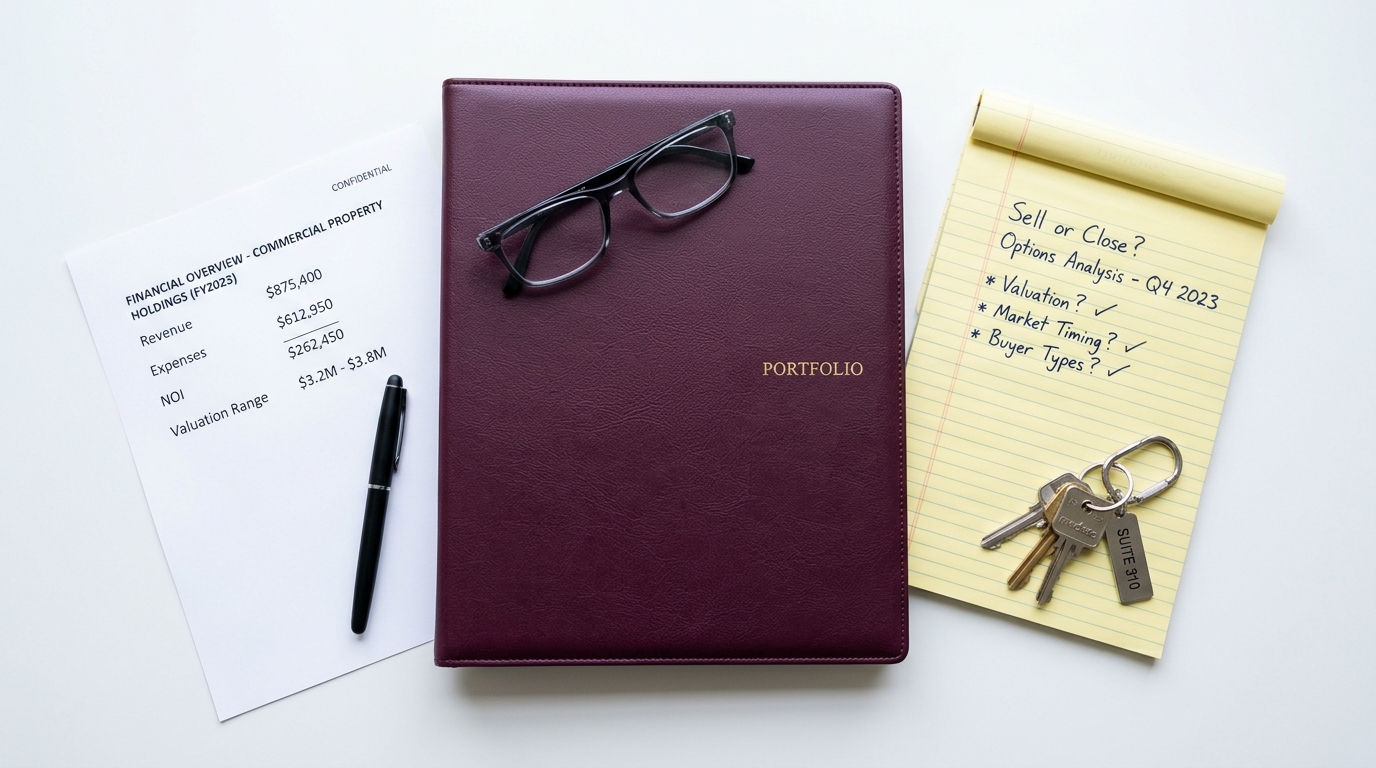
When a preschool isn’t performing the way you hoped — enrollment is down, cash flow is tight, you’re exhausted — it can be tempting to think closing is the simpler path. No drawn-out sale process. No negotiations. Just lock the doors, return the license, and move on.
Before you do that, it’s worth understanding what you’d actually be giving up.
Closing and selling are not equally painful exits. They have very different financial outcomes, and in most situations — even difficult ones — selling yields real, meaningful value that closing forfeits entirely.
What You Get When You Close
When you close a preschool, you recover the physical assets: the furniture, the equipment, whatever fixtures you own rather than lease. In a typical preschool, that might be a few thousand dollars at auction — maybe more if you have quality commercial playground equipment or a commercial kitchen. You also walk away from your lease obligations, though depending on your lease terms, that may come with an early termination penalty.
What you don’t recover is goodwill. The relationships with families. The reputation you’ve built in the community. The enrollment pipeline. The staff who know your systems. The license that took years and inspections and compliance work to earn. Those things have real economic value — but only to a buyer. When you close, they disappear.
What You Get When You Sell
A preschool that’s generating positive cash flow — even modest cash flow — has a sale value that’s a multiple of that cash flow. In the childcare industry, that multiple typically ranges from two to four times Seller’s Discretionary Earnings, depending on the school’s enrollment stability, lease terms, staff situation, and other factors.
What that means in practice: a school generating $80,000 in SDE might sell for $200,000 to $280,000. That’s not the furniture. That’s the business — the goodwill, the license, the ongoing revenue stream, the systems you’ve built. A buyer is paying for a business that works, not just assets they can cart away.
Even a school that’s struggling can have sale value. A school with declining enrollment but a solid license, a good location, and an experienced staff is not the same as a school with no value. It’s a school with fixable problems — and buyers who specialize in turnarounds or expansions will pay for the opportunity to fix them.
The Question to Ask Before You Decide
The most important question isn’t “is my school struggling?” It’s “is my school generating any positive cash flow?”
If the answer is yes — even if it’s $30,000 or $40,000 in SDE — there is a buyer for your school. The number on the other end of that calculation is almost certainly larger than what you’d recover by closing.
If your school is operating at a loss, the calculation gets harder. A school that’s genuinely cash-flow-negative has limited sale value, because a buyer has to account for the work and investment required to turn it around. But even here, the licensed real estate, the lease assignment, and the operational shell of a functioning preschool can have value to the right buyer — particularly to an operator who wants to expand into your market quickly without starting from scratch.
Closing Has Real Costs Too
It’s easy to think of closing as free — you just stop. But there are costs that sellers often underestimate.
Depending on your lease, you may owe months of rent in early termination fees. Equipment disposal, storage, or auction takes time and usually yields less than expected. Staff severance obligations may apply. And the families currently enrolled in your school — the ones who chose you, who built their schedules around your hours — will need to find care. That transition has a human cost that many owners feel deeply, even if it doesn’t show up on a balance sheet.
A sale, by contrast, transfers those obligations to a buyer who is committed to continuing the operation. Your families keep their childcare. Your staff keeps their jobs. Your license stays active. And you receive the value of everything you built, in cash.
The Harder Truth About Waiting
Owners who are considering closing often wait longer than they should before exploring a sale. By the time the decision feels urgent, enrollment has slipped further, key staff have left, and the financial story has gotten harder to tell. The window to sell at meaningful value is real, and it closes.
If you’re asking yourself whether to sell or close, the best time to have that conversation is now — not after another year of trying to hold things together. A realistic picture of what your school is worth, from someone who actually works in this market, takes a few weeks to develop. That information is free to obtain, and it changes the decision every time.
Most owners who go through that process discover their school is worth more than they assumed. Some discover it isn’t — and that’s useful information too. But you can’t make a sound decision without the number in front of you.
Closing forfeits goodwill. Selling transfers it. In most cases, the difference is significant enough to be worth finding out.
Chelsea Reue is a childcare business sales specialist and licensed real estate agent with Preschool Exchange, helping preschool owners understand the value of what they’ve built and prepare for a successful transition.